


10 Early Signs of Damp: How to Spot Problems Before They Get Worse
Noticed a faint stain on the wall, or a musty smell that won't quite go away? These are the early signs of damp, and they're worth taking seriously. They're subtle, easy to write off as nothing, and they affect a huge number of UK homes every year. Catch them now and you're usually looking at a straightforward fix. Leave them, and you can end up with rotting skirting boards, crumbling plaster and a much bigger bill.
Here's the thing to remember before we go any further: damp itself isn't the diagnosis, it's the symptom. The actual cause might be condensation, rising damp, penetrating damp coming in from outside, or even a hidden plumbing leak. This guide walks through what to look for and what each sign is telling you, drawing on what we see every day in damp proofing.
Why Spotting Early Signs of Damp Matters
Catch damp early and you're usually dealing with a cleaning job or a straightforward repair. Leave it, and it rarely stays superficial: it works into masonry walls, plaster and timber, and what started as a stain becomes a job that affects the structural integrity of the wall. Acting early is almost always cheaper than waiting.
There's a health side to this too. Damp left untreated leads to mould growth, and that can affect indoor air quality and cause respiratory problems for anyone in the house. And there's the everyday cost: peeling wallpaper, flaking paint and damaged skirting boards all mean redecorating sooner than you should have to.
10 Early Signs of Damp to Watch For
These are the common signs, and most of them are easy to miss the first time you see them. Spot one and it's worth investigating before it turns into something bigger.
1. A musty smell in a room. Often the very first sign, and it can show up well before you see any staining. If a room smells damp and airing it doesn't help, take that seriously.
2. Peeling or bubbling paint. This usually means moisture is trapped behind the surface and can't escape, because water vapour can't get through the paint or wallpaper on top of it.
3. Flaking or blistering plaster. Plaster that crumbles, powders or blisters has usually been sitting in excess moisture for a while. It's commonly linked to rising damp or long-term water getting in.
4. Tide marks on walls. Yellow or brown stains, usually up to about a metre above the floor, often point to rising damp. These tide marks form because moisture carries hygroscopic salts (natural salts already present in the ground and in older building materials) up through the wall as it rises. If that's what you're seeing, our DPC injection cream installs a new damp proof course to stop it at the source.
5. White powder, or salt deposits. This chalky white residue, called efflorescence, appears where moisture has evaporated through the masonry and left mineral salts behind on the surface.
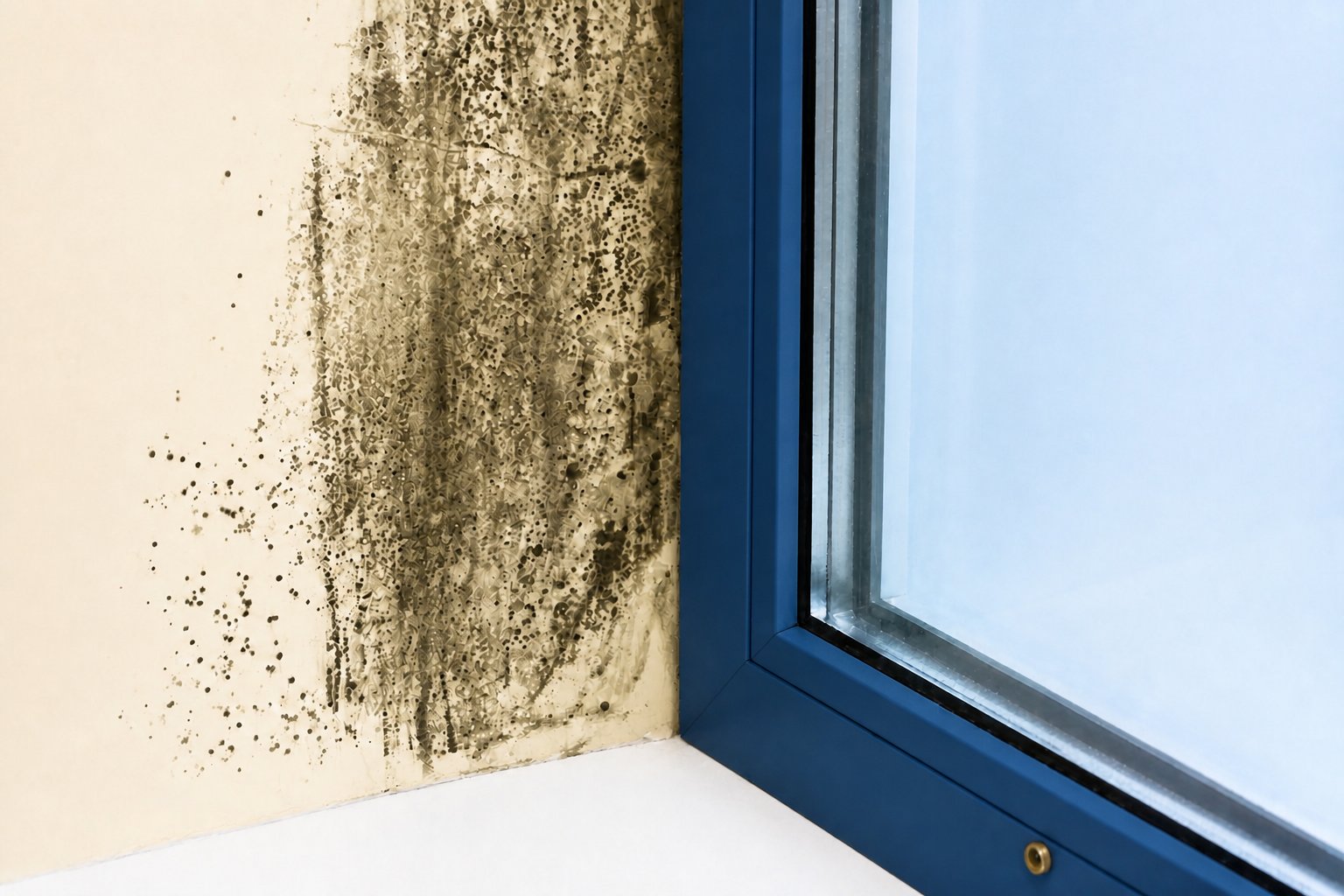
6. Black mould growth. Turns up in corners, behind furniture, or around window frames, and is almost always linked to condensation and poor ventilation rather than damp coming through the wall. Kingfisher’s mould control range covers both the clean-up and a paint that helps stop it coming back.
7. Cold or damp patches on walls. A patch of wall that feels colder or slightly damp to the touch can mean penetrating damp is getting in through a defect somewhere on the outside walls.
8. Warped or rotten skirting boards. Skirting or flooring that swells, twists or pulls away usually means prolonged moisture exposure lower down the wall. If the wood itself has started to break down, dry and wet rot treatments deal with that before you replace anything.

9. Condensation on windows. Frequent condensation, especially through the colder months, points to excess humidity indoors. Left alone, it tips over into mould and surface damp.
10. Damp around chimney breasts or ceilings. Staining or discoloured patches up high, around a chimney breast or on the ceiling, usually means a roof defect or penetrating damp after heavy rain. Worth checking the roof itself first; our roof repair range covers flat roof leaks and general repairs.
Where Early Damp Signs Usually Appear
Where the damp shows up is a genuine clue to what's causing it:
- Ground floor walls: Usually rising damp, especially when it's confined to the lower metre of the wall, where moisture is coming up through a failed or missing damp proof membrane or damp proof course.
- External-facing walls: More exposed to cold and driving rain, so more prone to both condensation and penetrating damp.
- Around windows and doors: Can mean the seals have failed, there's a cold spot letting heat escape (thermal bridging, in the technical term), or the room just isn't getting enough air. Extractor fans usually help here.
- Basements and cellars: Naturally at risk simply because they sit below ground and take the weight of groundwater pressure.
- Bathrooms and kitchens: Cooking, washing and drying clothes indoors all add moisture to the air, which is why condensation-related damp shows up here more than almost anywhere else in the house.
Early Signs vs Serious Damp Problems
|
Early Sign |
Most Serious Version |
What it Means |
|
Light staining on walls |
Crumbling plaster or damaged wall surfaces |
Moisture has likely been present a while and is affecting the building fabric |
|
Minor condensation on windows |
Persistent damp patches spreading across walls |
A developing moisture problem worth investigating |
|
Small mould patches in corners |
Widespread mould growth across walls or rooms |
An ongoing humidity or moisture imbalance that needs sorting |
|
Slight peeling paint |
Peeling wallpaper, damaged skirting boards or blown plaster |
Moisture is reaching internal finishes, and possibly structural materials |
|
Damp patches that stay the same |
Damp areas that keep growing or come back |
Watching and waiting is no longer enough; it needs treating |
|
Occasional salt deposits |
Persistent efflorescence and recurring staining |
Moisture is still actively moving through the wall |
What Causes Early Damp Signs

Four common causes sit behind almost everything on this list, and working out which one you've got is the whole game before you treat anything.
Condensation (the most common by far). Warm, moisture-laden air meets a cold wall or surface and condenses. Usually down to poor ventilation and high indoor humidity, and most noticeable in winter.
Rising damp. Moisture rising through ground floor walls via capillary action, usually because the damp proof course has failed or was never fitted. Signs stay confined to the lower part of the wall.
Penetrating damp. Rain getting in through a defect in the building fabric: cracked render, faulty pointing, or blocked gutters on outside walls. Usually worse after heavy rain. A breathable exterior masonry sealer is often the fix once the defect itself is repaired, and if the wall's already damp, Storm Seal can be applied without waiting for it to dry out first.
Plumbing leaks. Hidden pipework, a failed seal or a roof defect can all introduce moisture that appears suddenly and stays local to one spot, rather than spreading gradually like the other three.
When to Seek Professional Advice
Most early signs of damp are well within reach of a bit of ventilation or a straightforward repair. A few situations are worth getting proper advice on:
-
Damp that keeps spreading or coming back, even after you've treated it. That usually means the root cause is still there.
-
Signs of structural movement, cracking, bulging plaster, or movement around windows and doors. That's a job for a specialist, not a DIY fix.
-
Mould that keeps returning despite cleaning and better airflow. Points to a moisture source that hasn't been dealt with.
-
Water getting into a basement or cellar. Below-ground damp needs proper assessment, since groundwater pressure is a different problem to deal with than a damp patch on a ground floor wall.
If you're not sure which of these you're looking at, our damp proofing range covers the main fixes, and our technical team is happy to help you work out the cause at no cost, whether that's over the phone or by having a look at a photo you send us.
The Bottom Line

Damp rarely sorts itself out. What starts as a faint stain, a bit of mould in the corner, or a musty smell is usually an early warning that moisture has got into the building fabric. Ignore it and the problem grows, along with the eventual bill.
The key is getting the diagnosis right. Damp is a symptom, not the cause, and working out what's actually behind it stops you spending money on a fix that was never going to work. We've been making damp proofing products in the Lake District since 1988, and if you're not sure which of these signs you're dealing with, our damp proofing systems and our team are here to help you get it right the first time.
Frequently Asked Questions
What are the first signs of damp in a house?
Usually subtle: a persistent musty smell, light staining on walls, peeling paint, a bit of mould in the corners, or condensation forming regularly on windows. These tend to show up well before anything more visible.
Is a musty smell always damp?
Not always, poor ventilation or stale trapped air can smell similar. But if it persists after you've aired the room properly, it's usually pointing to moisture somewhere in the building fabric.
Can early damp fix itself?
Rarely. Better ventilation can ease condensation-related symptoms, but causes like rising damp, penetrating damp or a plumbing leak need proper treatment. Watching and waiting isn't a fix if the signs are still there after a few weeks.
Are early damp signs dangerous?
Not usually straight away, but they shouldn't be ignored. Left alone, moisture affects structural materials and creates the conditions mould needs to grow, which can affect air quality and cause respiratory problems. Dealing with it early keeps both the health risk and the repair bill down.
Author: Leon


