


Can You Paint Lead Flashing? How to Do It Properly
Can you paint lead flashing? Yes, as long as the lead is sound and you use a paint formulated for lead. It's typically a treatment for older lead that's carbonated (white chalky appearance) and has started staining adjacent masonry, slates or tiles. New lead by contrast should be oiled with “Lead Patination Oil” straight after fitting.
Lead renovating paints won't fix lead that's split, cracked or lifting, those issues require attention from a roofing professional.
Some roofers will tell you not to paint lead at all, and for new lead that advice is correct. “Patination Oil” is the preferred treatment for new lead because it provides a more natural finish and inhibits corrosion. When new lead is installed, if left unprotected it quickly reacts with oxygen, moisture and carbon dioxide to form irregular and unsightly white staining (carbonation). “Patination Oil” gets its name because it helps the lead to develop an even and attractive patina of weathering. It contains linseed oil which temporarily seals the lead and regulates the initial weathering (essentially retarding the chemical reaction) until the lead develops its natural resilience.
Critically applying “Patination Oil” to lead that has already carbonated will not reverse the chemical reaction, whatever its age.
So, lead renovation paints earn their place on old lead that is decades old and also on lead which never had “Paintination Oil” protection when installed.
Here at Kingfisher UK, we're a family-run business and we've been making coatings and sealers in the Lake District since 1988. The advice we give customers is always the same: check the lead surface carefully before you open a tin.
New Lead or Old Lead: The Right Answer Depends on Which You Have

White carbonating lead can be very unsightly, as the staining often contaminates mineral building materials such as stonework or brick masonry that are “downhill” from the lead.
Lead is used in more roofing situations than we can reasonably list here but include:
-
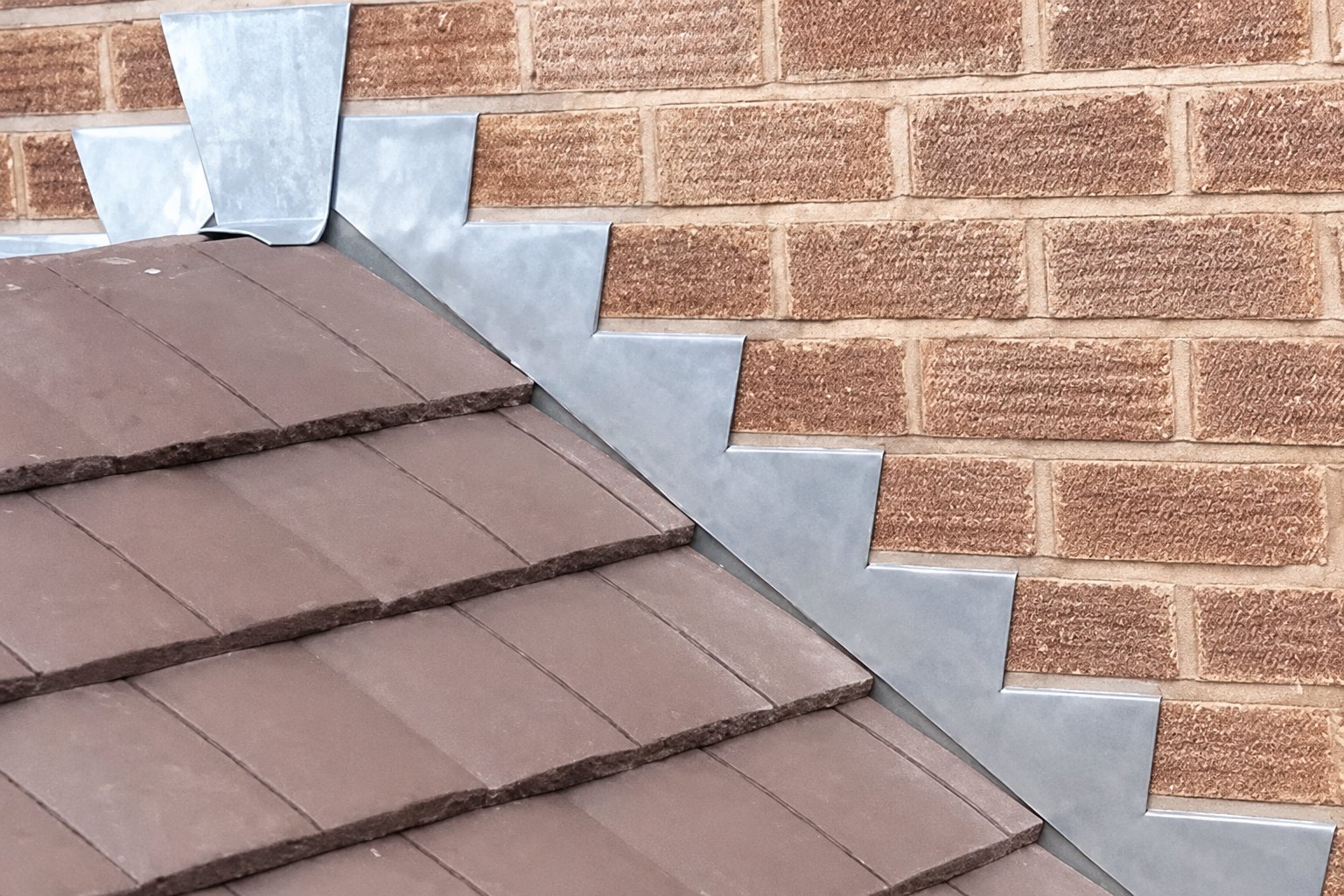
Lead flashings (typically where lead meets masonry or timber)
-
Lead lined valleys
-
Chimney flashings
-
Horizontal insets
-
Dormer windows & skylights (Velux)
That's where patination oil comes in. We manufacture Lead Brite Patination Oil, the protective film described above that helps control white staining while the natural patina forms on new lead.
However, much older lead installs or those without a primary patination oil treatment may need to be painted to improve the appearance, arrest the carbonation and prolong the life of the lead.
Here's how to match your lead to the right route:
|
Your Lead |
What to Do |
|
New lead, just fitted |
Oil it as soon as it’s fitted, ideally before rain. |
|
Old lead, chalky white or streaking the brick |
Clean it (Step 3 below), then use a paint made for lead. Streaks or powder coming from under the laps can mean corrosion, so read the next section first. |
|
Old lead, painted and sound |
Don't strip it. Our data sheet doesn't cover painting over existing paint, so ask our technical team (01229 869100) first. |
|
Old lead, painted and flaking |
Don’t strip it yourself. See Step 3, part b. Older paint may contain lead. |
The first two rows have a clear answer. The last two need more care, and if the lead is split, cracked or lifting, it's a roofer's job before any paint goes on. We cover that next.
When Paint Won't Help: Splits, Lifting and Water Damage
Renovating paints do a good job on tired, stained lead, but they can't repair lead that's damaged. Our data sheet says to repair or replace damaged, cracked or thin lead before painting, and our roof coatings guidance says coatings won't resolve leaks caused by worn leadwork. So before you buy anything, it's worth checking the flashing for these signs. If you spot any, hold off on the paint and get a roofer to take a look first:
-
A split or crack. Lead expands and contracts with temperature, and lead that can't move freely can buckle and crack.
-
Lifting edges, loose flashing or lead pulling away from a mortar joint. Flashing should be correctly dressed and securely fastened.
-
White streaks or powder coming from under the laps, which can point to corrosion from below
-
A damp patch below, or damaged render around the flashing.
How to Check Your Flashing
Not sure what you're looking at? Inspect it from the ground first, with binoculars or your phone's zoom, and walk right round the house, because small defects are easy to overlook from one angle. Check several places: loose or missing tiles and slates beside the flashing, and cracked mortar where the lead is tucked into the wall. Indoors, stains on a ceiling or in the loft can point to a flashing problem, but the damp patch is often some distance from the actual leak, so get a roofer to trace it.
A Quick Word on Asbestos
If the roof has sheets, soffits or boards that could be asbestos cement, don't touch, clean or paint them. HSE says not to try to repair or remove asbestos materials yourself without training, and suggests asking an environmental health officer at your local council for advice.
What a Roofer Can Do
A roofer repairs a split with a welded patch or a replacement section, and can reseal the joint between sound lead and masonry with a gun-applied Lead and Roof Flashing Sealant, which we supply. Sealant is there to seal the joint, and it doesn't replace correctly fitted lead. If you spot any of the signs above, ask a roofer whether it's a small defect or a replacement job. Paint comes after, if at all.
What Paint to Use on Lead Flashing

Use a paint made for lead, and check that the tin confirms this. Lead expands and contracts with temperature, so this isn't a job for whatever's lying around in the shed.
The good news is we make one for exactly this. Our Lead Renovation Paint is a high-bond and highly elastic acrylic paint that helps recover the appearance of lead that's gone white and chalky. It accommodates a high degree of thermal expansion and contraction and is suitable for most external leadwork including flashings, but excluding areas where water may “pond” (gutters). It is water-based, has a matt finish and comes in black or lead grey, in 2.5 litre and 5 litre tins. If your lead is old and stained, it's the one to reach for.
Step 1: Sort Safe Access (Chimney Flashing Is a Job for a Roofer)
HSE says almost one in five deaths in construction work involve roof work, and many involve smaller builders working on domestic roofs. All work on roofs is highly dangerous, even if a job only takes a few minutes.
Decide whether you can reach the lead flashing safely before you buy a tin. If you've checked it from the ground, as above, the next question is how you'd get to it. HSE advises roof workers that almost all domestic roof work needs scaffolding, including around chimneys and roof windows. So chimney flashing, and anything on a sloping roof or near an edge, is a roofer's job.
HSE states that ladders are for jobs measured in minutes. Painting needs a tin and brush in your hands and typically takes far longer than that.
Carry on only if you can reach the lead from the ground, or from access equipment set up by someone competent. Otherwise it’s best to book a roofer.
Step 2: Pick Your Weather Window
Find a dry spell long enough to clean, dry and paint the lead, and after prolonged rain, give the lead time to dry out first. The Lead Renovation Paint data sheet sets these limits:
|
Condition |
Limit on the Data Sheet |
|
Air and surface temperature |
Between +6°C and +35°C. Don’t apply below +6°C. |
|
Surface and conditions |
A dry surface, in dry conditions. |
|
Rain after painting |
None expected for at least 24 hours. |
|
Evening dew point |
The paint needs to cure before the evening dew point, when moisture starts to settle on surfaces as the air cools. Plan for it, especially on the shorter days of winter. |
|
Cure times (at 20°C) |
Initial cure 1 to 4 hours. Full cure 24 hours. |
|
Coats in winter |
Initial cure can take 4 hours, so only one coat a day. On a roof warmed by the summer sun the paint can dry in under an hour, so both coats can go on in a day. |
Check the product page for the latest version of the data sheet before you start.
In practice this is a dry, mild-day job. With one coat a day in winter, two coats can take two good days.
Worth knowing: let the first coat dry before the second, and don't start a coat you can't finish before evening. If the forecast is marginal, wait. If you're unsure about timings, ring our technical team on 01229 869100.
Step 3: Clean the Lead Without Making Dust
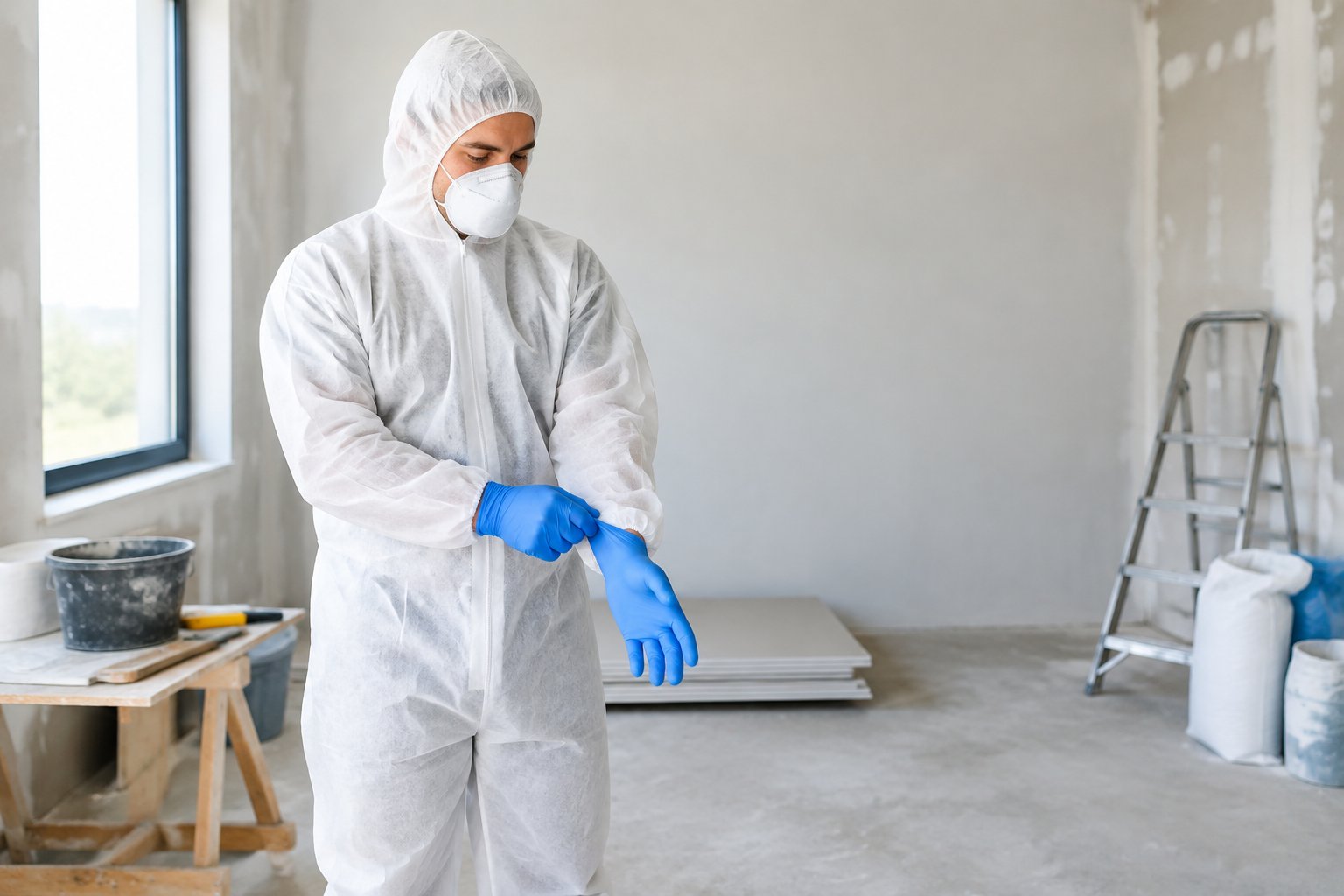
The aim is clean, dry lead and no dust in the air.
Working with lead can be hazardous to health. HSE says lead gets into the body when you breathe in dust or fume, or swallow it by eating, drinking or smoking without washing your hands and face. The white crust on old flashing is best treated as lead dust too, so protect yourself first:
-
A face mask. Our data sheet asks for at least an FFP3 mask when you're preparing and cleaning. HSE's example is an FFP3 disposable mask or a half mask with a P3 filter. Tight-fitting masks need a fit test and a clean-shaven face.
-
Disposable gloves and overalls, worn while you prepare and paint, and taken off before you leave the work area.
-
Good hygiene. Wash hands and forearms before eating, drinking or smoking, take breaks away from the work area and keep children and pregnant women away.
-
Chalky bare lead. Cleanse it thoroughly with warm water on a damp cloth or sponge, especially where dust and grit have gathered, using only as much water as you need. Leave it to dry. Don't use a pressure washer, and NEVER use a dry wire brush or sandpaper either, because dry abrasion makes dust. Bag the cloths and any debris, and dispose of them safely as contaminated waste, as HSE advises.
Once the lead is clean, dry and sound, and a roofer has done any repairs, you're ready to paint.
Step 4: Brush On Two Coats
Aim for an even, fully worked-in film in two coats, applied inside your weather window from Step 2. Getting the prep right first saves you painting the same flashing twice.
Brush on two coats with a premium 50mm (2”) paint brush, in broad, even strokes, and don't over-apply. Be careful cutting-in edges and corners as accuracy here makes for a much sharper finished appearance. Work the paint well into crevices and overlap joints. The data sheet also covers airless spraying, but that needs the right kit and some experience, and it asks for an FFP3 mask when spraying, so for most people a brush is the way to go.
Clean your tools with soap and water. The safety data sheet says not to let the paint enter drains or watercourses. Keep your gloves and overalls on while you paint, and keep the area ventilated until the paint's dry, as our data sheet asks.
The data sheet gives 5 to 6 m² per litre per coat, depending on how porous the surface is. That means two coats on a 2.5 litre tin cover roughly 6 to 7.5 m², and on a 5 litre tin roughly 12.5 to 15 m². The 15 sqm and 30 sqm on the product listings are one coat at the top of that range, so plan on half for two coats.
If the tiles beside the lead flashing look tired once it's done, our roof tile coatings cover those.
Final Thoughts
So, painting lead flashing depends on four things: the lead is old, stained and sound, and that you use a paint made for lead. New lead is better oiled, and anything split, cracked or lifting needs a roofer before a brush gets anywhere near it. Get that call right and the rest is straightforward.
Working at height and working with lead both carry real risk, so don't take chances. This guide draws on HSE guidance and is a starting point, not the final word. We make coatings and we're not health and safety advisers, so speak to a competent person or health and safety professional before you start, and book a roofer for anything you can't reach safely from the ground.
If you're unsure whether your lead needs paint, oil or a roofer, ring our technical team on 01229 869100. Kingfisher is a family-run business, and we'd rather talk you through the right product before you spend anything than sell you one that doesn't suit the job.
Frequently Asked Questions
Can you paint lead black, or only lead grey?
Yes. Lead Renovation Paint comes in black or lead grey. Choose the colour that suits your tiles, slate or window frames.
Should new lead flashing be painted or oiled?
New lead is normally oiled (Lead Patination Oil) as soon as it's fitted.
Why does lead flashing turn white?
Carbon dioxide in rainwater attacks the surface of the lead and forms white lead carbonate. Over time it builds up into a protective patina that halts further decay, but it doesn't look attractive. Oiling new lead chemically manages the development of the “patina” so that it is even and retains more of the original lead colour.
Can you paint lead in winter?
Only on the right day. The data sheet says not below +6°C air or surface temperature, a dry surface, no rain for 24 hours and cure before the evening dew point, with one coat a day in winter. See Step 2 for the full limits.
Is paint for lead the same as lead paint?
No. A paint for lead is a coating for lead metal and contains no lead ingredient. Ours is a water-based acrylic polymer.
“Lead paint” usually means old decorative paint made with lead pigment. HSE says lead pigments were widely used in paint for homes until the 1960s and weren't removed from commonly used paints until the early 1980s, so old paint on an older house may contain lead.
Author: Leon


