


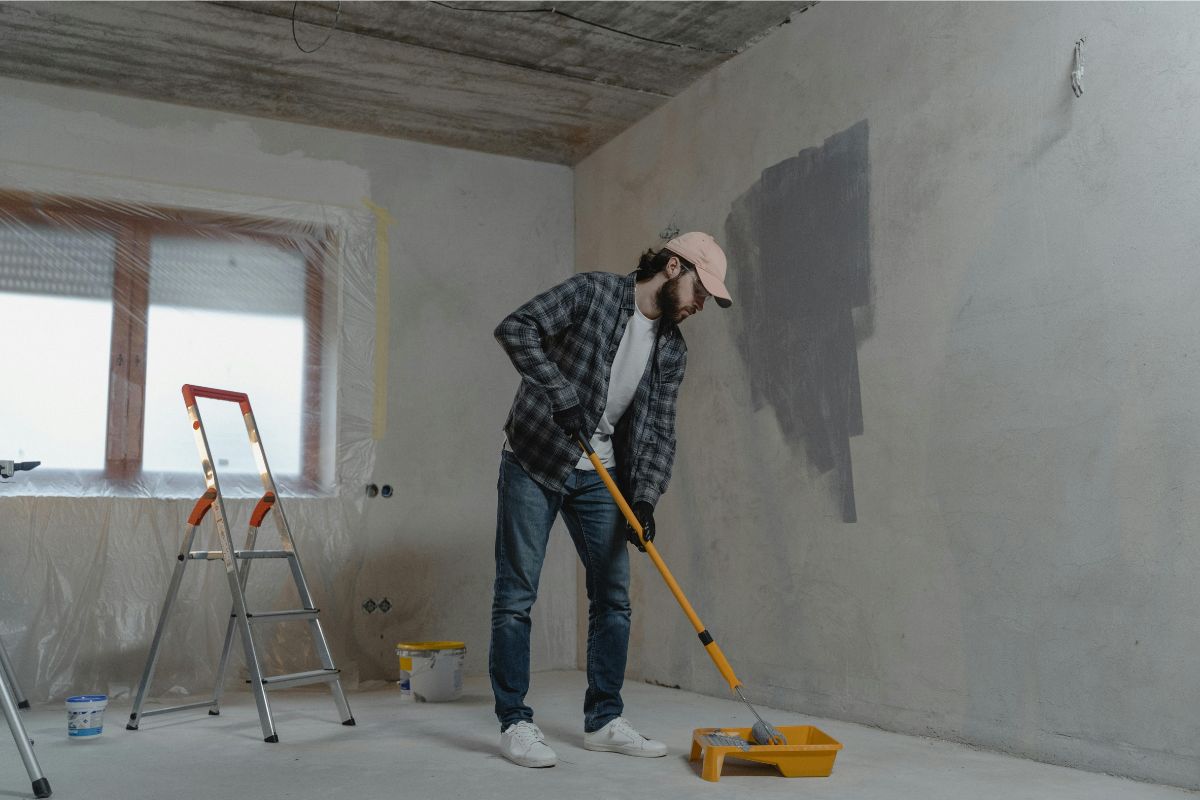
Damp Proof Paint: What Is It & How It Works?
Damp proof paint is often misunderstood. On its own, paint will not “fix” damp. However, when used correctly and in the right circumstances, damp proof paint plays an important role in containing residual moisture on interior walls, protecting internal surfaces, and preparing walls for further treatment or decoration.
True damp proofing treats paint as part of a holistic system, leveraging decades of expertise to ensure products address the underlying issue instead of just hiding the symptoms.
Key Highlights
- Damp proof paint is not a cure for damp; it is a supporting product used within a wider damp or waterproofing system.
-
It works by containing residual moisture, isolating salts, and forming a waterproof barrier on internal walls and ceilings.
-
It should only be used after the source of damp has been identified and addressed.
-
Suitable for penetrating damp, residual damp, and hygroscopic salts, but not for active rising damp.
-
Correct specification and surface preparation are essential, as incorrect use can trap moisture and delay proper remedial work.
What Is Damp Proof Paint?

Damp proof paint (sometimes referred to as damp seal paint or damp blocking paint) is a specialist proof membrane paint designed to resist moisture and isolate damp surfaces. Unlike standard masonry paint, which is decorative and breathable, damp proof paint is formulated to create a protective waterproof barrier that helps prevent residual moisture and salts from passing through internal walls and finishes.
These coatings are typically bitumen-based or polymer-modified, forming a dense, moisture-resistant layer once cured. Some act as a liquid-applied membrane, sealing the surface and providing a stable base for further treatments such as plastering or decoration.
What damp proof paint does not do is cure the underlying cause of damp. It is not a replacement for structural repairs, damp proof courses, or waterproofing systems. Used correctly as part of a wider damp treatment system, however, it plays an important role in containment, protection, and long-term surface preparation.
What Types of Damp Can Damp Proof Paint Help With?
Damp proof paint can be effective in specific scenarios, particularly where moisture is already being managed or has been reduced. Understanding when it is appropriate is key to using it successfully.
1. Penetrating Damp
Penetrating damp occurs when external moisture passes through external walls due to defects such as cracked render, damaged pointing, or porous masonry like brick, stone, or bare brick surfaces. In these cases, damp proof paint can be used as a secondary internal barrier once external defects have been repaired. It helps limit moisture migration to internal finishes but should never be relied on to stop active water ingress on its own.
2. Residual Damp After Treatment
After damp proofing works (such as installing a damp proof course (DPC), tanking a wall, or completing structural repairs), walls take time to fully dry because moisture only evaporates at a rate of about an inch (30 mm) per month, which means a saturated 12-inch thick wall can take up to 12 months to dry out. Damp proof paint is commonly used during this drying phase to seal in residual moisture, protect interior walls, and allow redecoration to proceed without peeling paint or damp staining bleeding through finishes.
3. Hygroscopic Salts
Hygroscopic salts left behind by previous damp issues can continue to attract moisture from the air, even when the original source of damp has been resolved. Damp proof paint is effective at isolating salt-contaminated surfaces, preventing recurring damp patches, mould growth, and discolouration on walls and plaster. Salt contaminated surfaces should be pre-treated with an “Anti-Sulphate Solution” salt inhibitor in advance of painting.
Important: Damp proof paint is not suitable as a standalone solution for active rising damp. Where moisture is being drawn up from the ground level, the underlying cause must be addressed before any surface coatings are applied.
What Damp Proof Paint Does NOT Do (Important)

Damp proof paint is a useful tool, but it is not a cure-all. Used incorrectly or in the wrong situation, it can delay proper repairs rather than solve the problem.
It does not replace a damp proof course (DPC). Where rising damp is present, a failed or missing DPC must be addressed before any surface coatings are applied. Painting over active rising damp will only trap moisture and lead to further damage.
Damp proof paint also does not stop structural water ingress. Issues such as leaking masonry, defective pointing, cracked render, or failed seals must be repaired at source. Applying paint alone will not prevent water continuing to enter the building fabric.
Finally, it does not fix underlying building defects. Damp proof paint should never be used to mask problems that require proper investigation and remedial work.
True moisture protection requires that damp proof paint be recommended only where it is technically appropriate, serving as part of a properly specified damp or waterproofing system rather than a shortcut.
When Is Damp Proof Paint the Right Solution?
Damp proof paint is most effective after the source of damp has been identified and addressed, or where moisture levels are already reducing. It is used to support remedial work by protecting internal finishes rather than replacing structural solutions.
The table below outlines when damp proof paint is, and is not, the right choice.
| Scenario | Is Damp Proof Paint Suitable? |
| After DPC installation | Yes |
| Residual damp during drying | Yes |
| Historic damp marks | Yes |
| Cellars / garages | Yes, but light-duty only |
| Constant water pressure | Typically, “no”, but sometimes effective if hydrostatic pressure is minimal |
| Untreated rising damp | No |
Damp Proof Paint vs Other Damp Treatments Compared

Damp proof paint is just one option within a wider range of damp control methods. Understanding how it compares to other treatments helps ensure the right solution is used in the right situation.
| Treat | Best Used For | Level of Protection | Structural Solution |
| Damp Proof Paint | Residual damp | Low-Medium |
No |
| Tanking Slurry | Basements, water pressure | High | Yes |
| Damp proof membrane | Persistent Damp | High | Yes |
| Masonry Paint | Decoration Only | None | No |
How to Apply Damp Proof Paint Correctly
Damp proof paint must be applied correctly to perform as intended. Poor preparation or incorrect use will lead to failure, regardless of product quality.
Surface Preparation: Remove loose plaster and brush away visible salts. If you find heavy salt deposits, use a salt neutraliser before painting. Any bare brick or damaged brickwork should be repaired or filled to create a smooth surface.
Application Process: Apply two coats as specified, using a roller or brush. This high-performance paint is quick drying, allowing the second coat to be applied within a suitable timeframe. Ensure the room has adequate ventilation, using extractor fans if necessary, as recommended by HSE guidelines for working with specialist coatings.
4 Common Mistakes to Avoid
- Applying damp proof paint to actively wet or untreated damp walls
- Skipping or rushing surface preparation
- Painting over unresolved structural defects
- Trapping moisture within walls by sealing damp without addressing the cause
Applied correctly, damp proof paint forms a reliable part of a wider damp treatment system. Applied incorrectly, it simply delays proper remedial work.
Final Thoughts: Damp Proof Paint as Part of a Complete System
Damp proof paint is not a cure for damp; rather, it is a supporting component within a wider damp treatment system. Used correctly, it helps contain residual moisture, isolate salts, and protect internal finishes.
The key is correct diagnosis. Before any paint is applied, the source of damp must be identified and addressed. Applying surface coatings without resolving the underlying issue will only mask symptoms and risk further damage.
At Kingfisher Building Products, damp proof paint is recommended where it is technically appropriate, alongside proven damp proofing and waterproofing systems. For guidance on the right approach (or to explore suitable products), speaking to a specialist before starting work is always the safest option.
If you’re ready to order, simply add to the basket from our range of damp proof paints, selected and extensively tested to ensure good crack bridging properties and long-lasting protection.
Frequently Asked Questions
How long does damp proof paint last?
When correctly specified, prepared and applied, damp proof paint can provide long-term performance. Its lifespan depends primarily on accurate diagnosis, substrate condition and whether the underlying moisture source has been fully resolved. Ongoing moisture movement, structural defects or building movement will reduce durability.
What is the minimum application temperature?
Most modern damp proof paints are water-based formulations and should not be applied when air or substrate temperatures fall below 7°C. Ideally, temperatures should be maintained above 10°C during application and initial curing. High humidity can also slow curing. Where conditions are marginal, controlled heating and ventilation may assist drying, but excessive heat should be avoided, particularly where new mortar repairs or tanking systems have recently been installed, as rapid drying can cause shrinkage cracking.
Can damp proof paint be applied to a damp surface?
Damp proof paint should not be applied to a visibly wet surface with standing water or active moisture. However, it can be applied to a surface that is in the process of drying, provided the underlying moisture source has been properly resolved.
As a general guideline, if the substrate is lightening in colour and no longer shows active moisture, application can proceed. In situations where time is critical, gentle use of heaters or ventilation can help dry the surface layer sufficiently to allow the coating to achieve initial adhesion before residual moisture migrates outward. Always follow manufacturer guidance regarding moisture levels and preparation before application.
Can damp proof paint trap moisture?
Yes, if used incorrectly. Damp proof paint forms a moisture-resistant barrier. If applied where the moisture source has not been addressed, it can trap water within the structure and lead to further deterioration. Correct diagnosis and preparation are therefore essential before application.
Is damp proof paint breathable?
Most damp proof paints are not vapour-permeable. They are designed to isolate residual moisture and prevent staining rather than allow vapour transmission. Where breathability is required, alternative systems may be more appropriate.
Can I use damp proof paint in a basement?
Damp proof paint can be suitable for light-duty moisture control in basements or cellars, particularly where residual damp remains after repairs. However, where walls are subject to hydrostatic pressure or ongoing groundwater ingress, a correctly specified structural waterproofing system, such as cementitious tanking or cavity drain membranes, will usually be required.
Author: Jamie


