


Best Paving Sealers: Which One Should You Use?
The best paving sealers do more than protect a surface. Applied to a clean, well-prepped driveway or patio, the right sealer can make a tired, weathered surface look like it was laid last week. Whether you're dealing with block paving that's lost its colour, natural stone that's gone green every winter, or concrete that's picked up years of oil and grime, sealing is one of the most straightforward ways to get your outdoor space looking sharp again.
The right product depends on your surface type, the finish you want, and the level of protection you need. This blog covers what to look for and what actually works. If you're ready to shop, Kingfisher's paving sealer range is a good place to start.
Why Sealing Your Paving Actually Matters

Unsealed paving takes a constant beating from the moment it's laid. Moisture works into surface pores and cracks, then freezes in winter and forces the material apart from the inside. While that's happening, algae and moss are taking hold on the damp surface, making it slippery and harder to clean with every season that passes. Any oil, grease, or spillage that lands on unprotected paving soaks straight in and stays there, and UV light quietly fades the colour until the whole thing looks tired and worn. None of this is dramatic on its own, but the damage compounds over time. A quality paving sealer addresses all of it before it starts.
Left untreated, your paving faces:
-
Freeze-thaw cracking from trapped moisture
-
Algae, moss, and weed growth
-
Permanent oil and grease staining
-
UV fading and colour loss
-
Progressive surface deterioration
Types of Paving Sealers & What to Know Before You Choose

Two decisions matter most before you choose the paving sealer you need: penetrating vs coating, and water-based vs solvent-based.
Penetrating sealers absorb into the paving material without forming a surface film, leaving the appearance largely unchanged. It’s the most durable option, ideal for natural stone. Coating sealers, on the other hand, sit on top, stabilise joints, and deliver a defined finish. They are better suited to block paving and imprinted concrete.
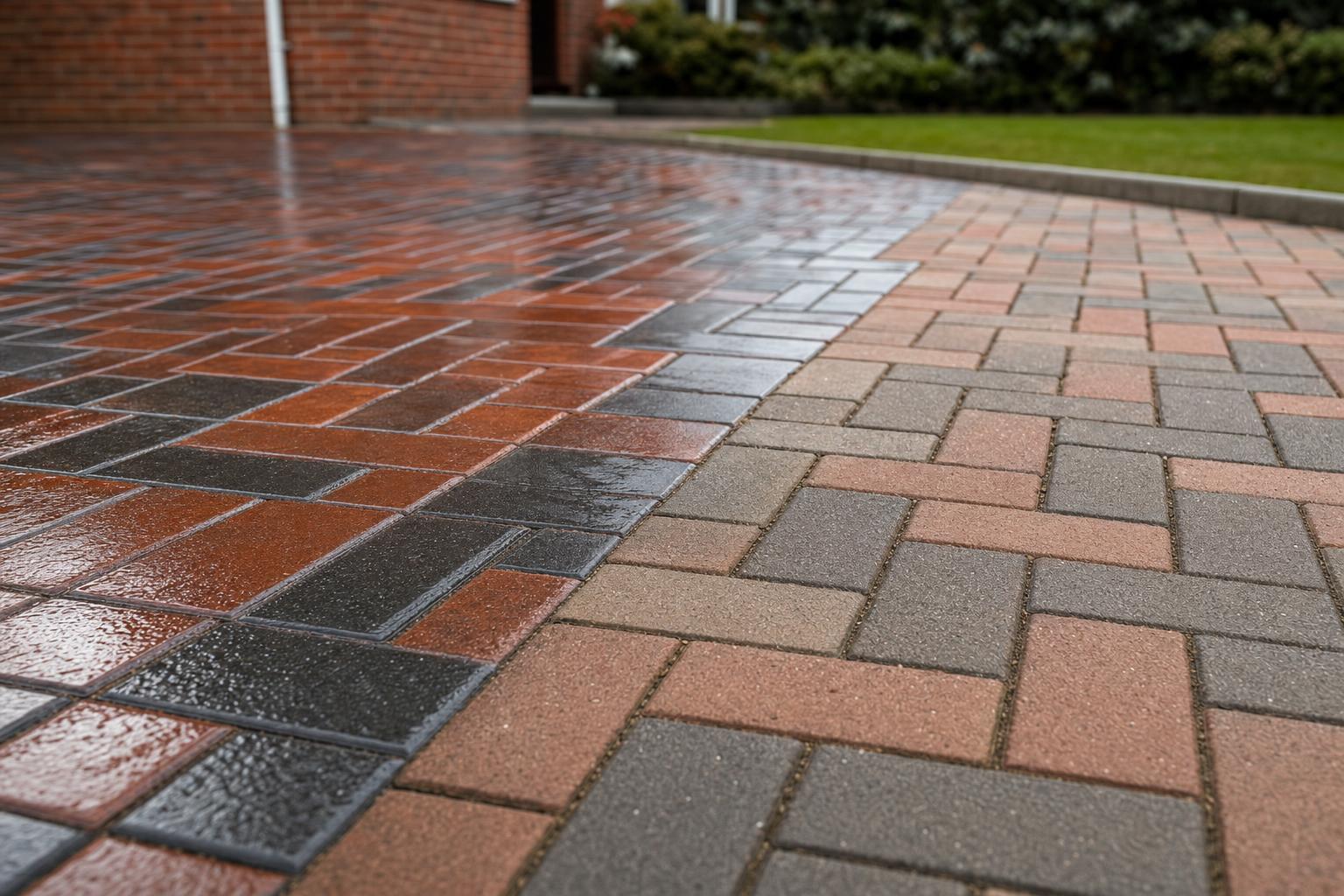
On formulation, water-based sealers are low odour, eco-friendly, and dry quickly, making them the practical choice for most projects. Solvent-based penetrates deeper and handles cold or damp conditions better, but needs more ventilation. For finish, matt and low sheen hide wear better over time. Wet look and semi gloss add aesthetic appeal, particularly on block paving driveways where that enhanced appearance is the whole point.
Best Patio Sealer by Surface Type
Not all paving is the same, and neither are the sealers designed to protect it. Block paving, concrete, and natural stone each have different properties, and using the wrong sealer can mean poor adhesion, trapped moisture, or a finish that doesn't last. Here's what works best for patio and driveway protection.
1. Block Paving Sealer
A coating sealer is the right approach for block paving. It stabilises jointing sand between blocks, creates a stain resistant finish that resists oil and general dirt, and delivers the enhanced appearance most people are after on a driveway or patio. Water-based acrylic coating sealers work well for most projects. For driveways under heavy vehicle use, look for something rated as hard wearing with good abrasion resistance.
Key benefits for block paving:
-
Sand stabilisation between blocks
-
Weed and moss prevention
-
Oil and grease resistance
-
Colour enhancement options
A wet look is the most popular finish for driveways and makes a noticeable difference to how the surface looks. For driveways that take a lot of traffic, a matt or low sheen finish holds up better over time.
2. Concrete Surfaces
Both penetrating and coating sealers work on concrete surfaces, depending on the finish you want.
|
Type |
Appearance |
Best For |
|
Penetrating concrete sealer |
No change |
Maximum protection, natural look |
|
Coating sealer |
Satin, semi-gloss, or wet look |
Colour enhancement, patio slabs, imprinted concrete |
Either way, concrete needs to be thoroughly clean and dry before anything goes down. Browse our Paving and Concrete Cleaners for effective prep options, then give the surface time to dry fully before sealing. Browse our Paving and Concrete Cleaners collection for effective prep options most professionals choose.
3. Natural Stone & Black Limestone
Natural stone needs a penetrating natural stone sealer, not a surface coating. A coating sealer risks trapping moisture, altering the finish, or peeling as the stone's porosity works against adhesion. A penetrating formula makes the surface water and oil repellent without changing its appearance.
Essential features for a natural stone sealer:
-
Deep penetration, no surface film
-
Breathable formula
-
UV stable
-
Safe for sensitive stone types
For black limestone specifically, UV protection is non-negotiable. Black limestone fades to grey under UV light and a standard clear sealer won't prevent it. A wet look natural stone sealer with UV stabilisers restores and maintains that depth of colour, which is usually the reason people chose black limestone in the first place.
What to Look for in a Paving Sealer

A good paving sealer does more than sit on the surface. Here's what the right product should actually deliver:
Weather and frost protection: reduces water ingress and surface water absorption, helping prevent cracking caused by freeze-thaw cycles over winter
Biological growth control: inhibits algae, moss, and weed growth, particularly in block paving joints where organic matter builds up quickly
Stain resistance: creates a protective finish that resists oil, fuel, and general dirt, making spills easier to clean before they penetrate
Joint sand stabilisation: binds jointing sand between block paving units to prevent washout, weed root penetration, and surface movement
Colour restoration: many sealers restore depth of colour to weathered or faded surfaces alongside the protective function
Anti-slip compatibility: coating sealers can reduce surface grip when wet, particularly on slopes or steps. Check whether your chosen product supports anti-slip additives if this is a concern.
Reapplication: penetrating sealers can typically be reapplied directly. Coating sealers that have peeled or degraded need the old product removed before a new coat goes down.
How to Get the Best Results from Your Paving Sealer
The sealer is only as good as the prep underneath it. A clean, dry, structurally sound surface is what separates a finish that lasts several years from one that turns milky, peels, or fails within a season.
Before you start:
-
Clean the surface thoroughly. Remove all dirt, oil stains, algae, moss, and weeds. Sealers cannot bond properly to a contaminated surface and no amount of extra product fixes poor prep.
-
Clear organic material from joints and top up jointing sand where needed before sealing, not after.
-
New paving needs at least six weeks before sealing to allow any efflorescence to emerge and be cleaned away. Sealing too early traps it permanently.
-
Check for cracked or damaged areas and repair before applying any sealer.
-
Porous surfaces like sandstone absorb significantly more product than denser materials. Factor this into how much you buy and expect the first coat to disappear faster than you'd expect.
Conditions matter:
Most sealers should not be applied below 10 degrees Celsius or when rain is forecast within the drying window. The surface needs to be completely dry, including within the joints. Moisture trapped under a coating causes adhesion failure and a ruined finish. Spring and early autumn tend to offer the most reliable application windows in the UK.
Application:
Work in manageable sections and apply evenly. Rollers suit most DIY applications and give good control over coverage. Sprayers cover larger areas faster but need a steadier hand to avoid uneven application. Two coats are standard across most paving sealers. Allow the first to dry fully before the second goes down, and check the product data sheet for recoat intervals rather than guessing.
Closing Thoughts: Why Professionals Use Paving Sealer
A sealed driveway or patio isn't just better protected, it looks noticeably sharper and stays that way for years longer than one that's left untreated. The prep takes a few hours, the application takes a weekend, and the results speak for themselves every time someone pulls up outside your house. Whether you're starting from scratch with new block paving or bringing a tired concrete driveway back to life, Kingfisher's paving sealer range has the right product for the surface. Browse the full collection or contact the technical team if you want a recommendation before you buy.
Frequently Asked Questions
Which paving sealer is best for a driveway with heavy traffic?
Heavy vehicle use needs a durable sealer with strong abrasion resistance and solid protection against oil and fuel spills. Solvent-based sealers generally outperform water-based options here as they penetrate deeper into the paving and create a tougher protective layer. For concrete block paving or imprinted concrete driveways specifically, a coating sealer with a glossy or wet look finish also stabilises joints and resists the kind of staining that comes with regular vehicle use.
Which sealer works best for concrete paving slabs in the UK?
Concrete paving slabs need a sealer that handles frequent rain, temperature fluctuations, and UV exposure without degrading quickly. A water-based acrylic sealer is a practical choice for most concrete surfaces as it allows moisture vapour to escape while protecting against weathering, algae, and moss growth. Make sure the product has UV resistance built in. UK conditions are damp enough that biological growth on an unsealed surface is a matter of when, not if. Read our blog on How to Protect Your Paving for more details.
How long does paving sealer last?
It depends on the product, surface type, and how much traffic the area takes. A driveway taking daily vehicle use will need reapplication sooner than a lightly used patio or path. The most reliable indicator is the surface itself. When water stops beading and starts soaking in, or when the paving looks faded and dull, it's time to reseal. Always check the manufacturer's guidance for the specific product you're using.
What is the best way to prepare paving before sealing?
Clean the surface thoroughly first. A pressure washer with a suitable paving cleaner removes dirt, moss, algae, and oil stains effectively. Clear organic material from joints, top up jointing sand where needed, and repair any cracked or damaged areas before sealing. The surface must then be completely dry before anything goes down. The better the prep, the longer the sealer lasts and the more even the coverage.
Do I need to clean paving before sealing?
Yes, always. Dirt, algae, and staining prevent the sealer from bonding to the surface properly, which leads to poor adhesion, patchy coverage, and early failure. A sealed surface is only as good as what's underneath it. Cleaning isn't optional prep, it's the most important part of the job.
Can I seal wet paving?
No. Moisture trapped beneath a sealer causes cloudiness, poor adhesion, and potential peeling further down the line. Wait for dry weather and allow at least 48 hours after rain or cleaning before applying. If you're unsure whether the surface is dry enough, tape a piece of plastic sheet to the paving overnight. Condensation underneath means it needs more time. Wear chemical resistant gloves and protective goggles during application regardless of the product you're using.
Author: Jamie


